Potty training does not fail because your puppy is stubborn. It fails because the schedule is inconsistent. Get the timing right and house training becomes almost automatic; get it wrong and you will be cleaning up for months. Here is a potty training schedule that actually works, broken down by your puppy’s age.
The one rule that makes potty training work
Take your puppy out before they need to go, not after they signal. Puppies do not yet have the bladder control or the communication skills to warn you in time, so you get ahead of it with a schedule. Reward heavily the instant they finish outside, and supervise or crate them indoors so mistakes have no chance to become habits.
How long can a puppy hold it?
A rough guide: a puppy can hold their bladder about one hour per month of age, plus one. So a two-month-old puppy maxes out around three hours — and much less when active. This is why an 8-week-old puppy needs a break roughly every hour or two while awake, and why “he just went an hour ago” is not a reason to skip the next trip out.
Puppy potty training schedule by age
8–10 weeks
Outside every 1–2 hours while awake, and always after waking, eating, drinking, and play. Expect at least one overnight trip. Supervision is constant at this age.
10–12 weeks
Stretch to every 2 hours or so while awake, keeping the after-meal, after-nap, after-play trips. Most puppies can start making it through the night, or close to it.
3–4 months
Every 3–4 hours during the day. Your puppy is gaining real control now; consistency is what turns it into a reliable habit.
4–6 months
Every 4–5 hours. Many puppies are largely house trained by this stage, provided the earlier weeks were consistent.
6 months and up
Most dogs can hold it 6+ hours and are fully house trained. Keep a predictable routine and you are essentially done.
A sample daily potty schedule
First thing in the morning, after breakfast, mid-morning, after lunch, mid-afternoon, after dinner, after evening play, and right before bed — plus overnight for young puppies. Anchor potty breaks to events (meals, naps, play) and they are much easier to remember.
The step-by-step routine
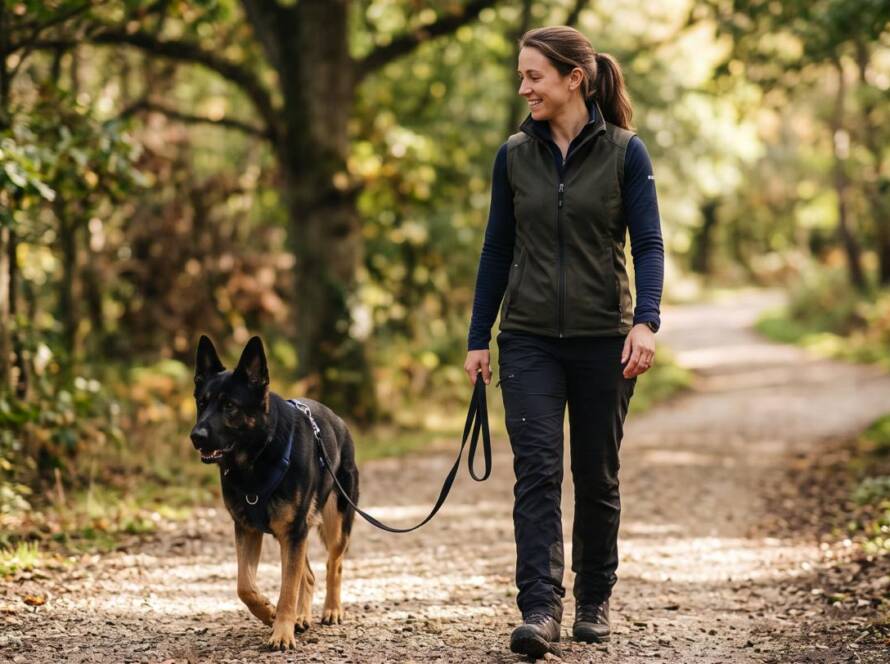
Take your puppy to the same spot on leash, use a consistent cue like “go potty,” wait quietly without playing, and the moment they finish, reward with praise and a treat right there. Then allow supervised free time. This pattern teaches your puppy exactly what earns the reward.
Accidents and regression
Never punish an accident you did not catch in the act — your puppy will not connect it to anything except you. Clean thoroughly with an enzymatic cleaner so no scent remains to draw them back. A sudden regression, especially around 6 months, is common and usually means the schedule slipped or your puppy is being given too much unsupervised freedom too soon. Tighten the routine and it resolves.
When to get help
If you are being consistent and still struggling, a professional can spot what is off fast. Our Train & Play program and private lessons help Central Florida families build rock-solid house-training habits and the obedience foundation that goes with them.
Frequently asked questions
Why is my puppy suddenly having accidents again?
Regression usually means the schedule slipped or your puppy got too much freedom too soon. Rule out a medical issue with your vet, then go back to more frequent, supervised potty breaks.
Should I use potty pads?
They can help in specific situations, but they also teach some puppies that going indoors is acceptable. If your goal is outdoor-only, it is often cleaner to skip pads and commit to the schedule.
Need a hand with house training?
Book your free evaluation or call (844) 404-0732. Elite Professional Dog Training — you haven’t tried everything until you’ve called Elite.