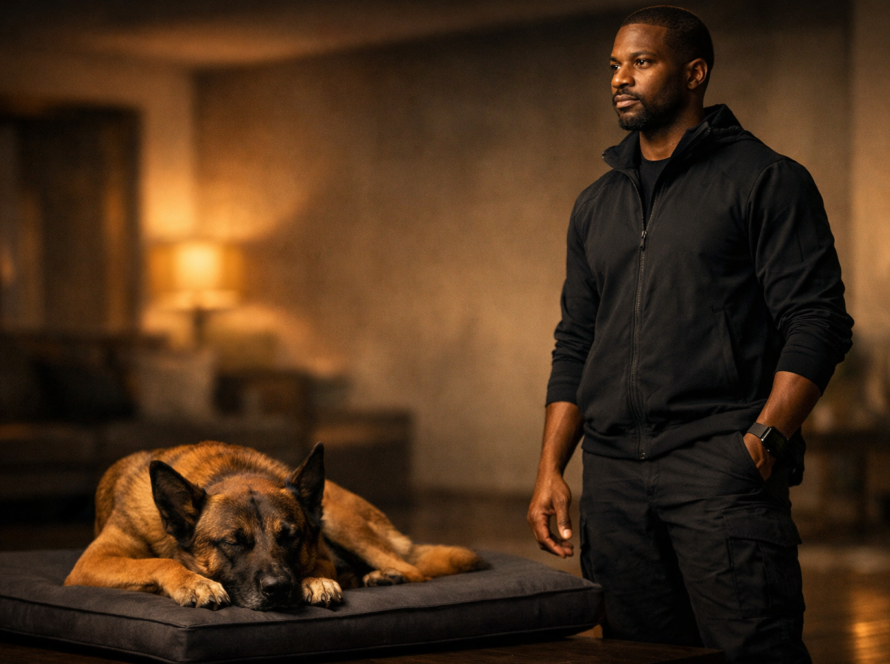
Key Takeaways: Striking a Balance Between Obedience and Personality
Discovery-based dog training keeps your dog’s unique personality intact while ensuring obedience
Compulsion methods often result in robotic responses that suppress your dog’s natural spirit and joy
Dogs that are allowed to think and make choices develop a deeper understanding and more reliable responses
The best-trained dogs keep their adorable quirks while knowing when it’s time to obey
Elite Professional Dog Training’s approach provides the ideal balance of personality and obedience
“I like dogs with personality. I just want them to obey.” This straightforward statement from master trainer Laurent Gabriel encapsulates what most dog owners truly desire. We don’t adopt dogs to create perfect little robots that obey our every command without question. We bring these furry individuals into our homes for their unique personalities, their quirks, their expressiveness, and yes – even their occasional stubbornness.
When our dogs start to act out, we often find ourselves in a dilemma. Should we make them obey through repetitive training and corrections, or is there a more effective method? At Elite Professional Dog Training, we have found that there is indeed a better way – it’s called discovery-based dog training, and it’s changing the way dogs learn while keeping their unique personalities intact.
Training your dog doesn’t mean you have to rob them of their individuality. Instead, the best dog training methods enhance their personality, creating a dog that is both unique and responsive when needed. Let’s delve into how this method works and why it is so effective for dog training that maintains personality.
The Issue with Conventional Dog Training
For many years, dog training has been ruled by methods that put obedience first. These techniques frequently involve repetitive exercises, physical adjustments, and a focus on the human as the undisputed “pack leader.” While these methods can undoubtedly create obedient dogs, they frequently do so at a significant expense – your dog’s spirit and natural happiness.
Consider the dogs you’ve seen that have been trained in a military-style – standing perfectly still, eyes forward, following commands with the precision of a machine. Impressive? Maybe. But there’s often something absent in their eyes – that spark of joy that is unique to dogs, that natural enthusiasm that made you fall in love with dogs in the first place.
Dogs become fearful of making mistakes
Natural behaviors are suppressed rather than channeled appropriately
Dogs learn what NOT to do rather than what TO do
The relationship becomes based on control rather than partnership
Training sessions become stressful rather than enriching
When Obedience Comes at the Cost of Personality
When training relies heavily on compulsion, dogs often enter a state of learned helplessness. They comply not because they understand or agree with what’s being asked, but because they’re afraid of the consequences of non-compliance. This fundamentally changes your relationship with your dog and can permanently alter their personality.
Laurent Gabriel sums it up well: “If I never give the dog the opportunity to think, then I’ve created a soldier. That kills the personality. I don’t want that.” This soldier-like state might look impressive in training demonstrations, but it results in a dog who’s essentially walking on eggshells, always afraid of making a mistake.” For a deeper understanding of these training methods, explore the benefits and drawbacks of positive reinforcement.
Indications That Your Dog’s Personality is Being Diminished
What are some indications that your current training methods are suppressing your dog’s innate personality? Be on the lookout for these warning signs: your usually spirited dog becomes reluctant and sluggish to respond in training sessions. They may avoid making eye contact, display stress signals such as excessive yawning or lip licking, or appear to emotionally “shut down”.
Worse still, dogs trained with heavy compulsion can start to show two different personalities. One is robotic and compliant during “training mode,” and the other is excessively energetic, almost manic, when finally free from that pressure. This Dr. Jekyll and Mr. Hyde pattern isn’t balance—it’s a stress response.
Dogs that are trained primarily through fear or force may become more anxious in new situations or around new people. This is because they have learned that mistakes lead to unpleasant consequences, so they see new environments as threatening rather than exciting opportunities to explore.
“I love their unique personalities… that’s what makes a dog a dog. That’s what makes them who they are.” – Laurent Gabriel, Master Trainer at Elite Professional Dog Training
The Science Behind Training with Fear
Modern dog behavior science has confirmed what many trainers have noticed for years: training methods that rely heavily on punishment or “dominance” actually hinder learning rather than improve it. When dogs are in a state of fear or stress, their bodies flood with cortisol and adrenaline – hormones that prepare them for fight or flight, not for learning and making thoughtful decisions. This physiological reaction literally makes it more difficult for your dog to think clearly and understand what you’re asking them to do.
Why “Boot Camp” Training Doesn’t Work Long-Term
Dogs only perform when they’re afraid of being punished or corrected
Behaviors disappear quickly without constant reinforcement
The underlying emotions (fear, anxiety) often come out in other bad behaviors
Dogs don’t really understand what they’re supposed to do – they’re just trying to avoid punishment
The bond between humans and dogs suffers from the negative association with training
Want to hear some good news? There’s a much better method – one that actually gets more reliable results while keeping your dog’s wonderful personality intact. It’s called discovery-based training, and it’s at the heart of our philosophy at Elite Professional Dog Training in Sanford, FL.
Getting to Know the Discovery Method
Laurent Gabriel, a leading figure in the dog training world, has pioneered a new approach to dog training that respects and preserves a dog’s unique personality. This approach is called the discovery method. Instead of using compulsion training, which imposes behaviors on a dog, the discovery method encourages dogs to think, solve problems, and make decisions. This method of training not only keeps a dog’s personality intact, but also enhances it by boosting their confidence and creating a dog that knows what is expected of them, rather than just fearing the consequences of not behaving as desired. For more on similar training techniques, explore the benefits and drawbacks of positive reinforcement in dog training.
Allowing Dogs to Think and Make Decisions
Something incredible happens when dogs are given the chance to think through situations and figure out the correct choices. They become active learners instead of just passively receiving commands. Laurent puts it this way: “Thinking allows the dog the chance to make the correct decision.” This mental engagement is what actually leads to reliable obedience, not just mindless repetition or fear of being corrected.
Imagine how kids learn. We don’t teach a kid to read by punishing every error – we steer them, celebrate victories, and let them figure things out. Dogs flourish under the same strategy. When your dog realizes that sitting politely gets attention while jumping doesn’t, they’ve established a cognitive link that sticks far better than compliance born from fear.
Establishing Confidence Rather Than Dread
The core of discovery-based training is confidence – your dog learns that you’re a dependable guide rather than an erratic enforcer. This confidence creates a working partnership where your dog wants to cooperate because good things happen when they do. The difference is clear in how dogs approach training sessions: with excitement and involvement rather than anxiety.
When a dog has trust in their owner, they are more likely to try new behaviors and work through difficult situations. They are not preoccupied with avoiding punishment, but are focused on earning rewards and figuring out what works. This mental freedom allows their full personality to shine through while they still learn the rules of living successfully in a human household.
Teaching Your Dog Through Discovery
Discovery-based training is a method that uses the way dogs naturally learn about their surroundings. Dogs and their wolf ancestors learn in the wild which behaviors bring rewards (like finding food or successful hunting) and which ones have natural consequences. We use this natural instinct to learn to create training that is understandable to dogs instead of confusing or scaring them.
Take this for instance, instead of compelling a dog to sit and then ordering them to “sit,” discovery training could coax the dog into the position with a treat, signal when they sit with a spoken “yes” or clicker, and then provide a reward. The dog learns that sitting earns them rewards. After several instances, a verbal command is given prior to the action, and the dog learns to link the word with the action. They are processing, not just responding. For a comprehensive guide on this method, check out teaching sit: every method explained.
“I don’t believe in multiple compulsion. I believe in discovery and letting the dogs think.” – Laurent Gabriel
The Role of Positive Reinforcement
Positive reinforcement is a crucial component of discovery training, but it’s not just about treats. It’s about creating clear communication and helping your dog understand what behaviors work. When a dog performs a desired behavior and receives something they value – whether that’s food, play, praise, or access to something they want – they’re more likely to repeat that behavior. For a deeper understanding, you can explore positive reinforcement explained and its benefits in dog training.
Just because we focus on positive reinforcement doesn’t mean there are no rules or discipline. It just means that we focus more on teaching dogs what they should do, rather than punishing them for what they shouldn’t. When discipline is necessary, it’s fair, consistent, and never done out of anger or frustration. The aim is to guide, not to scare.
Establishing Clear Rules Without Forcing Them
It’s no secret that every dog needs rules – that’s not up for debate. What discovery-based trainers get is that rules can be taught without squashing a dog’s spirit. Clear, consistent rules actually make dogs feel safer, not less. When a dog knows the house rules, they can let their personality shine instead of always being on high alert.
Here at Elite Professional Dog Training, our philosophy is to use natural consequences and clear communication to teach dogs boundaries. We don’t use fear or force. If a dog jumps, it won’t get attention until all four paws are on the ground. If a dog pulls, it won’t get to move forward until the leash is slack. We believe this approach not only teaches boundaries but also preserves the dog’s dignity and confidence.
Boundaries are taught through consistency, not intimidation
Natural consequences help dogs understand cause and effect
Clear communication prevents confusion and frustration
Rules provide security rather than restriction
Appropriate outlets for natural behaviors are provided
Preserving Your Dog’s Unique Personality
Every dog comes with a distinct personality, shaped by genetics, early experiences, and their individual temperament. Whether you have a bouncy, energetic Lab who greets everyone like a long-lost friend, or a thoughtful, cautious German Shepherd who assesses situations before engaging, these traits are part of what makes your relationship with your dog special. Proper training enhances these qualities rather than suppressing them.
The “On and Off” Switch
Laurent Gabriel believes that the key to dog training is teaching dogs to “turn on and off”. This means that dogs are free to be their happy, energetic selves during playtime and downtime, but they also know when it’s time to calm down and listen to commands. This balance is the ultimate goal of dog training that respects a dog’s personality while also ensuring consistent obedience.
Picture it as a kid who can be goofy and lively at the park but knows to calm down and use their “library voice” in a library. This adaptability is a sign of emotional intelligence, not suppression. Dogs who understand context and can modify their behavior accordingly are actually enjoying more freedom, not less. For more insights on how your dog’s personality affects training, check out this helpful article.
The Importance of Personality for a Harmonious Home
Dogs with personality add an immeasurable amount of joy to our lives. They make us laugh with their silly antics, provide comfort with their intuitive emotional responses, and create countless memories. A well-trained dog that retains their unique personality gives you the best of both worlds – dependability when you need it and pure joy in the moments in between. This balance creates a harmonious home that meets both human and dog needs.
If this balance isn’t maintained, it can lead to frustration for both the dog and the owner. Dogs that aren’t given the opportunity to behave in a way that is natural to them often find other, less desirable ways to expend their energy or express their instincts. Owners can become disheartened when their once lively companion seems to have lost their zest for life. The answer is to channel, rather than suppress, your dog’s natural drives and personality traits.
Embracing Your Dog’s Innate Qualities
The tenacity of a terrier, the zest of a retriever, the protective nature of a guardian breed – these traits can be strengths when guided correctly. Training your dog based on discovery rather than compulsion helps to guide these natural instincts towards suitable behaviors, instead of trying to remove them completely. The dog full of energy learns when it’s time to run and play and when it’s time to calm down. The protective dog learns to differentiate between real threats and regular visitors.
Here at Elite Professional Dog Training in Sanford, FL, we don’t aim to force every dog into the same box. We work with each dog’s natural instincts, finding ways to work with their breed-specific and individual needs while teaching them the boundaries that make living with humans peaceful.
Varied Personalities Require Varied Methods
One-size-fits-all training doesn’t work because dogs, like humans, have different ways of learning and different things that motivate them. Some dogs are extremely motivated by food, while others respond more to play or praise. Some learn by doing something over and over again, while others pick up on things quickly but get bored with doing the same thing repeatedly. Some are confident and bounce back easily, while others need a little more encouragement and help building up their confidence.
We take into account these differences and create training plans that work with your dog’s personality instead of against it. A sensitive dog might need softer guidance and more positive reinforcement, whereas a lively, confident dog might need clearer boundaries and more mental challenges to stay focused. This personalized approach is why our Boot Camp program has a remarkable 99% success rate. To understand more about how your dog’s personality affects training, you can read this Petsafe article.
Proof of the Pudding: Success Stories
Our training philosophy is proven every day by the results we see. Dogs that once dragged their owners down the street, ignored calls to come back, jumped on guests, or exhibited other difficult behaviors are transformed into responsive, well-behaved pets – without losing any of their essential “dogness.” These are not robots; they are the best versions of themselves.
From Unruly to Disciplined (Without Losing the Fun)
Consider Max, a lively Labrador who came to our Train & Play program with endless energy and no impulse control. His family adored his zest for life but couldn’t handle his pulling, jumping, and inability to calm down. Through discovery-based training, Max learned when it was okay to be playful and when to be calm. He still greets his family with wiggly joy, but now he sits politely until he’s invited to say hello. On walks, he checks in regularly with his owners instead of dragging them toward every distraction. If you’re interested in learning more about effective training techniques, check out our guide to mastering the stay command.
Max’s joyful Lab personality wasn’t lost – it was just redirected and given suitable outlets. His family can now appreciate his exuberance instead of feeling overwhelmed by it because he now understands boundaries.
The Timid Dog Who Discovered Bravery
Take Bella, for instance, a shepherd mix who arrived in our care, petrified of new people and situations. The conventional method of compulsion training would have destroyed the small amount of confidence she possessed. But our discovery method gradually built up her trust and offered her positive experiences to combat her fears. Bella discovered that new situations could be positive rather than scary through cautious socialization and reward-based training.
Now, Bella approaches new experiences with cautious curiosity instead of fear. She’s still thoughtful and observant – core aspects of her personality – but she’s no longer paralyzed by anxiety. Her owners have learned to read her subtle communication signals and give her the support she needs to navigate the world successfully.
Changes That Keep Personality Intact
Our greatest joy comes from hearing clients tell us that not only is their dog behaving better after training, but they’re also more like themselves. “Now that she knows what’s expected, she can just be a dog,” one owner told us after finishing our Private Lessons program. This is what we aim for – clear communication that puts dogs in a position to succeed, allowing them to express their personality in an appropriate way.
Our Training Philosophy in Practice
Our team at Elite Professional Dog Training doesn’t just talk the talk, we walk the walk. With over 35 years of experience and thousands of dogs trained, Laurent Gabriel has perfected the discovery method. He’s worked with all types of dogs: big, small, stubborn, and everything in between. The result? A training system that guarantees obedient dogs without compromising their unique personalities.
What Makes Elite Professional Dog Training Unique?
Our dog training programs stand out because we believe in the power of a dog’s mind. We don’t see dogs as machines to be programmed but as intelligent creatures capable of learning and growing. This respect for the dog’s ability to think is the basis of all our training programs, whether it’s our immersive Boot Camp, our flexible Train & Play daycare program, or our hands-on Private Lessons.
We believe in building a strong bond with your dog through clear communication, consistency, and positive reinforcement. We take the time to understand what motivates your dog and use that to encourage good behavior. If your dog needs boundaries, we provide them in a fair and clear manner without ever resorting to intimidation or confusion. For those interested in learning more about effective training techniques, check out our ultimate guide to teaching sit.
Laurent Gabriel’s Quarter Century of Expertise
With more than 35 years of experience, master trainer Laurent Gabriel brings a level of knowledge and skill to dog training that is hard to match. Laurent’s deep understanding of canine behavior allows him to develop training programs that are both effective and compassionate. Rather than just addressing the symptoms of behavior problems, Laurent gets to the root of the problem, addressing the underlying causes.
Laurent frequently states, “I love dogs with personality. I just want them to obey,” summarizing the philosophy that has given Elite Professional Dog Training its sterling reputation throughout Central Florida, including Lake Mary, Winter Park, and Orlando. This balanced method is why our success stories have been highlighted in the media more than 300 times.
Our Approach to Understanding Your Dog’s Unique Personality
Each training program we conduct starts with a detailed assessment of your dog’s individual personality, learning style, and behavioral requirements. We watch how they react to various stimuli, what drives them, and how they express stress or excitement. This customized evaluation lets us adapt our approach to your dog’s specific needs, rather than using a one-size-fits-all technique.
Additionally, we have in-depth conversations with you about your dog’s past, the dynamics of your household, and your particular training objectives. This comprehensive view allows us to create a plan that tackles not just behaviors but also the root causes – whether that’s surplus energy, anxiety, confusion about what’s expected, or absence of suitable outlets for natural instincts.
Our Training Programs: Boot Camp, Train & Play, and Private Lessons
We offer a variety of training options to suit a range of needs and lifestyles, all based on our discovery-based philosophy. Our main Boot Camp program offers intensive, immersive training where your dog stays with us for 4-6 weeks, learning basic obedience and addressing specific behavioral issues. Train & Play combines training with daycare for continuous skill development, while Private Lessons provide you with hands-on guidance for training your dog yourself with professional assistance.
Getting Started with Personality-Preserving Training
Are you ready to find out how your dog can be well-behaved and maintain its unique personality? The first step is a consultation where we can get to know you and your dog, learn about your specific challenges and goals, and recommend the best training approach. From there, we will develop a personalized plan to bring out the best in your dog while preserving what makes them special to you.
Your First Consultation: What to Expect
At Elite Professional Dog Training, our initial consultation is designed to familiarize ourselves with your dog’s current behaviors, your home environment, and your training objectives. We’ll watch your dog’s reactions to various stimuli and interactions with both people they know and those they don’t. This thorough evaluation allows us to identify the most effective training method for your dog’s unique personality and requirements.
Easy Methods You Can Begin Now
Although thorough training produces the most impressive outcomes, there are discovery-focused methods you can start using right away. Begin to reinforce calm behavior by giving your dog a reward when they decide to sit quietly. Try “capturing” good behaviors by marking and rewarding them when they occur naturally. Establish clear routines in your everyday interactions so your dog can anticipate what behaviors are effective in various circumstances. These easy steps start to develop the cognitive basis for more complex training.
How to Have a Happy, Well-Behaved Dog
Training your dog to behave well without losing their unique personality isn’t a quick fix. It’s a process that involves building communication, trust, and understanding. Whether you choose our Boot Camp, Train & Play, or Private Lessons, you’re investing in a relationship with your dog that will bring you joy and connection for years to come. The end result is a dog who knows when to be playful and exuberant and when to be calm and responsive.
Keep in mind, the objective isn’t flawlessness – it’s correspondence and amicability. Dogs will consistently be dogs, with all their magnificent doggy characteristics. Our preparation saves those exceptional characteristics while instructing limits that make living respectively wonderful for the two species.
Common Questions
When you’re thinking about discovery-based training for your dog, you probably have questions about how this approach is different from more traditional methods. Here are answers to some of the most common questions we get from dog owners thinking about our services:
When can I expect to see results from discovery-based training?
Most of our clients start seeing a difference within the first two weeks of consistent training. Dogs are incredibly adaptable, especially when the lines of communication are clear and consistent. We usually run our Boot Camp program for 4-6 weeks because it gives dogs the opportunity to not only learn new behaviors, but also to practice them until they become dependable habits in different environments and situations.
However, it’s important to remember that every dog is different. Their age, past training experiences, and unique personality can all affect how quickly they learn. The discovery method is about building a deeper understanding, not just obedience. This leads to more long-term results, even though the learning curve might be a bit slower compared to compulsion methods.
Can my dog still be obedient without punishments or corrections?
Definitely! In fact, dogs trained with discovery methods often develop more reliable responses because they understand what’s expected rather than simply fearing consequences. When dogs make the right choices because those choices have been consistently rewarded, their responses become internally motivated rather than dependent on the threat of correction.
Let’s be clear, discovery training doesn’t mean a lack of rules. In fact, clear and consistent rules are key – but we teach them through guidance and natural consequences instead of fear or intimidation. This results in a dog who chooses to cooperate because cooperation has consistently been rewarding. For those interested in learning more about effective training techniques, consider exploring Dreko’s boot camp for a comprehensive approach.
Is it possible for older dogs to learn using the discovery method?
Contrary to the popular saying “you can’t teach an old dog new tricks”, older dogs are often great candidates for discovery-based training. This is because they usually have longer attention spans and better impulse control compared to puppies. In fact, many older dogs in our programs show impressive progress, sometimes even outpacing their younger counterparts.
For dogs that have been trained traditionally or developed bad habits over time, shifting to discovery methods might need a period of adjustment. But dogs of all ages respond well to clear communication and positive reinforcement.
When it comes to older dogs, patience and consistency are key. We don’t expect an older dog to instantly drop behaviors they’ve been doing for years. Instead, we slowly mold new responses while making the old behaviors less rewarding.
What sets Elite Professional Dog Training apart from other trainers?
Our unique approach is balanced, focusing on both results and the emotional health of your dog. Some trainers only concentrate on obedience, often at the cost of the dog’s personality, while others focus on positive experiences without setting necessary boundaries. We believe the best approach is a combination of the two – providing clear guidance that results in reliable behavior while maintaining your dog’s spirit.
With over 35 years of experience under Laurent Gabriel’s belt, our 99% success rate is a testament to our effective methods. We have honed our approach over the years through work with thousands of dogs, figuring out what truly works for lasting behavior change while still preserving each dog’s unique personality. Our programs are comprehensive, addressing not just surface behaviors but also the underlying motivations and needs of your individual dog. For those interested in learning more about our achievements, check out how we became Orlando’s Best Silver Award Winner.
After the program is over, do I need to keep training?
Our programs are excellent for establishing a solid basis, but just like any other skill, maintaining your dog’s training requires regular practice and reinforcement. We offer comprehensive instructions for continuing your dog’s training at home, including specific exercises, troubleshooting tips, and management techniques.
“If you haven’t called Elite, you haven’t tried everything.” – The self-assurance behind our 99% success rate with dogs of all breeds, ages, and behavioral problems.
Fortunately, dogs trained using discovery methods usually retain their training better than those trained using compulsion. Because they grasp the concepts rather than just reacting to pressure, their behaviors are generally more robust even with occasional inconsistency.
Several of our customers opt to maintain regular refreshers or join our Train & Play scheme for continuous skill upkeep and social interaction. This ongoing assistance tackles any new issues that come up and enhances the robust base set during the original training.
Discovery-based dog training keeps your dog’s personality intact while ensuring dependable reactions when you need them most. The outcome is a dog who is both a pleasure to be around and their true selves – the ideal blend of obedience and personality that enhances your bond rather than weakening it.
Are you ready to see how your dog can be both well-behaved and full of personality? At Elite Professional Dog Training, we’re dedicated to helping you strike the perfect balance. Our discovery-based method maintains your dog’s unique personality while developing the dependable obedience that makes life together harmonious.
You didn’t provide any content to rewrite. Could you please provide the content you want me to rewrite?